Transformative Change for Biodiversity: Nine Horizon Eurpoe Projects Converge in Brussels
Biodiversity is declining faster than at any point in human history, and incremental policy measures have not been enough to reverse the trend.
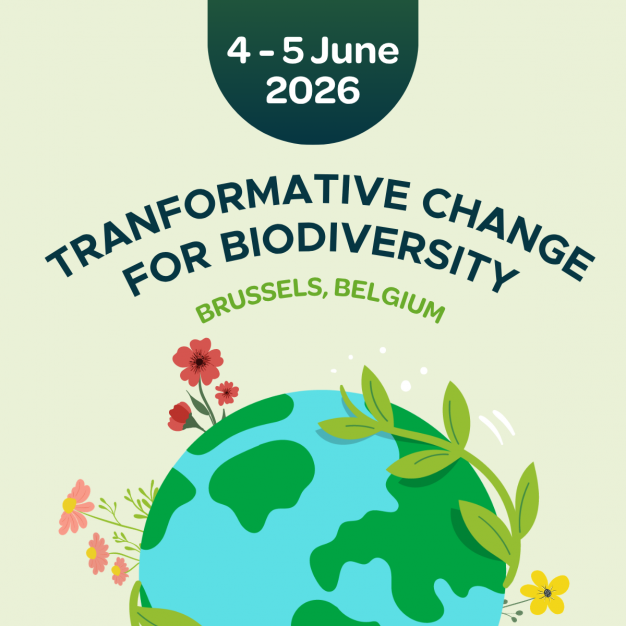
On 4–5 June 2026, Brussels will host one of the most significant gatherings of biodiversity researchers and policymakers in recent years: the Transformative Change for Biodiversity (TC4B) conference, the joint conference of Nine Horizon Europe Transformative Change project.
TRANSPATH is a proud co-organiser of this event, alongside eight other Horizon Europe research projects: BAMBOO, BIONEXT, BIOTraCes, BioAgora, CircHive, Daisy, Planet4B, and Transformative Change for Biodiversity & Equity (TCforBE).
What is the Transformative Change Cluster?
The Transformative Change Cluster is a coalition of Horizon Europe-funded research projects, each working to understand and enable the deep, system-wide changes needed to halt and reverse biodiversity loss. Rather than studying biodiversity in isolation, these projects examine the root causes from food production and trade regimes to social values, governance structures, and economic incentives that determine how societies relate to nature.TRANSPATH contributes to this cluster by identifying leverage points and interventions that can trigger change at consumer, producer, and organisational levels across diverse contexts in Eastern and Western Europe, Africa, and Latin America.Why this conference mattersThe conference represents a culmination of years of collaborative research across nine projects and dozens of institutions. Bringing together around 150 participants from science and policy, the event is structured as a space for learning, synthesis, dialogue, and strategic alignment.Critically, the conference is designed not just to share findings but to translate them into action. There will be strong emphasis on policy relevance, financing mechanisms, and implementation pathways, with the goal of informing major EU strategies including the Biodiversity Strategy for 2030 and the European Green Deal, as well as global processes including IPBES (the Intergovernmental Science-Policy Platform on Biodiversity and Ecosystem Services), and IPCC (Intergovernmental Panel on Climate Change).
The conference will also serve as a platform for shaping future collaboration and transdisciplinary research agendas, supporting sustained progress toward nature-positive and equitable futures.
Four conference tracks
The programme is organised around four thematic tracks that reflect the breadth of transformative change research:
Track A — Systems, Models & Scenarios
Exploring how complex systems thinking, modelling approaches, and future scenarios can help map pathways to biodiversity-positive outcomes. This track addresses the tools that researchers and policymakers need to understand cascading effects and identify high-impact intervention points.
Track B — Governance, Policy and Innovation
Examining the governance frameworks, policy instruments, and innovation pathways that can enable transformative change at scale. This includes subsidy reform, regulatory mechanisms, green trade policy, and institutional incentives for sustainable behaviour.
Track C — Society, Values and Practice
Addressing the social and cultural dimensions of transformation: how values, norms, and everyday practices shape our relationship with nature, and how they can be shifted. This track connects directly with TRANSPATH's work on consumer and producer behaviour and the role of choice architecture in enabling sustainability.
Track D — Posters, Videos & Visualisation
A dedicated space for showcasing research outputs, tools, and frameworks developed across the nine projects, with an emphasis on accessible communication and knowledge sharing.
From knowledge to action
A core theme running through the conference is translating research into actionable solutions. Sessions will showcase tools and scenarios, governance frameworks, real-world case studies, and insights on values, equity, and innovation all designed to provide science-based pathways for transformative change.
Participants will include policymakers, financial actors, and civil society stakeholders alongside researchers, ensuring that insights from years of interdisciplinary work can be directly connected to decision-making processes at European and global levels.
TRANSPATH's role
TRANSPATH has been working since 2022 to develop a suite of Transformative Pathways supported by a Toolbox of Transformative Interventions, as well as a Transformative Navigation Toolkit to help practitioners enable and navigate systemic change. The Brussels conference offers the opportunity to present these outputs to the wider research and policy community, gather feedback, and contribute to the cross-project synthesis that will shape the field going forward.
The project's research spans six case studies across Europe, West Africa, and Latin America, examining how trade regimes, consumer decisions, and producer practices interact with biodiversity outcomes. This global perspective will be a key contribution to the conference's cross-cutting discussions on equity, implementation, and governance.
Practical information
Dates: 4–5 June 2026
Location: Brussels, Belgium (also accessible online)
Participants: ~150 researchers, policymakers, and stakeholders
Registration: Register via the official event page
Event website: bionext-project.eu/transform4biodiversity
The conference agenda is available for download in both short and detailed versions from the event website.
Stay connected
To stay up to date with TRANSPATH's participation in the Brussels conference and receive updates from the event, subscribe to the TRANSPATH newsletter and follow the project on LinkedIn.
You can also follow the Transformative Change for Biodiversity conference directly on LinkedIn.
TRANSPATH receives funding from the European Union's Horizon Europe research and innovation programme under grant agreement No. 101081984.